Do not wait for an emergency to find out who will respond
Calling a national emergency number may be necessary, but response times vary widely across South Africa.
Your best chance of getting help quickly may come from a combination of private security, community safety structures, neighbours, local police contacts and emergency medical services.
Prepare this information before you need it.
1. Your private security provider
If you or your residential complex subscribe to an armed-response service, save the control-room number on your phone.
Also find out:
- whether the company has a panic button or mobile app;
- which areas it covers;
- whether it responds when you are away from home;
- whether family members may use the service;
- how it handles medical emergencies; and
- whether it works with local community safety groups.
Test the panic function according to the provider’s instructions. Do not assume it is active because the app is installed.
2. Your local community safety network
Save the emergency contact details for your local:
- Community Policing Forum or relevant policing forum;
- neighbourhood watch;
- residents’ association;
- security control room; and
- community emergency group.
Find out which number is monitored after hours and what information responders need from you.
Community WhatsApp groups may help alert nearby responders, but they should not be your only plan. Messages can be missed, delayed or shared more widely than intended.
3. Your nearest police station
Save the direct number for the police station serving your area. Also record the station’s physical address.
The direct number may provide another route when the national police emergency line is delayed. Keep 10111 as an additional option for urgent police assistance.
4. Emergency medical services
Identify which ambulance services operate in the areas where you live, work and travel regularly.
If you have medical aid, insurance or another emergency benefit, confirm:
- which ambulance provider you should contact;
- whether pre-authorisation is required;
- whether dependants are covered; and
- which number operates after hours.
Save the number of a reputable private ambulance service in your area, as well as 112 and 10177.
In a life-threatening emergency, call the first appropriate service you can reach. Do not delay urgent care while trying to establish which service will be covered financially.
5. People who can act
Choose two or three trusted people who:
- are likely to answer;
- know where you live and work;
- can contact security or emergency services for you;
- understand your check-in arrangements; and
- know who else to call if they cannot reach you.
They should know that they are part of your emergency plan.
Create your list
Complete and save the following:
Private security control room:
[Number]
Security panic app or button:
[Details]
Local policing or community safety forum:
[Number]
Neighbourhood watch or residents’ group:
[Number]
Nearest police station:
[Number and address]
Private ambulance service:
[Number]
Medical aid emergency service:
[Number]
Trusted contact 1:
[Number]
Trusted contact 2:
[Number]
Police emergency:
10111
Cellphone emergency:
112
Ambulance:
10177
Make the list easy to reach
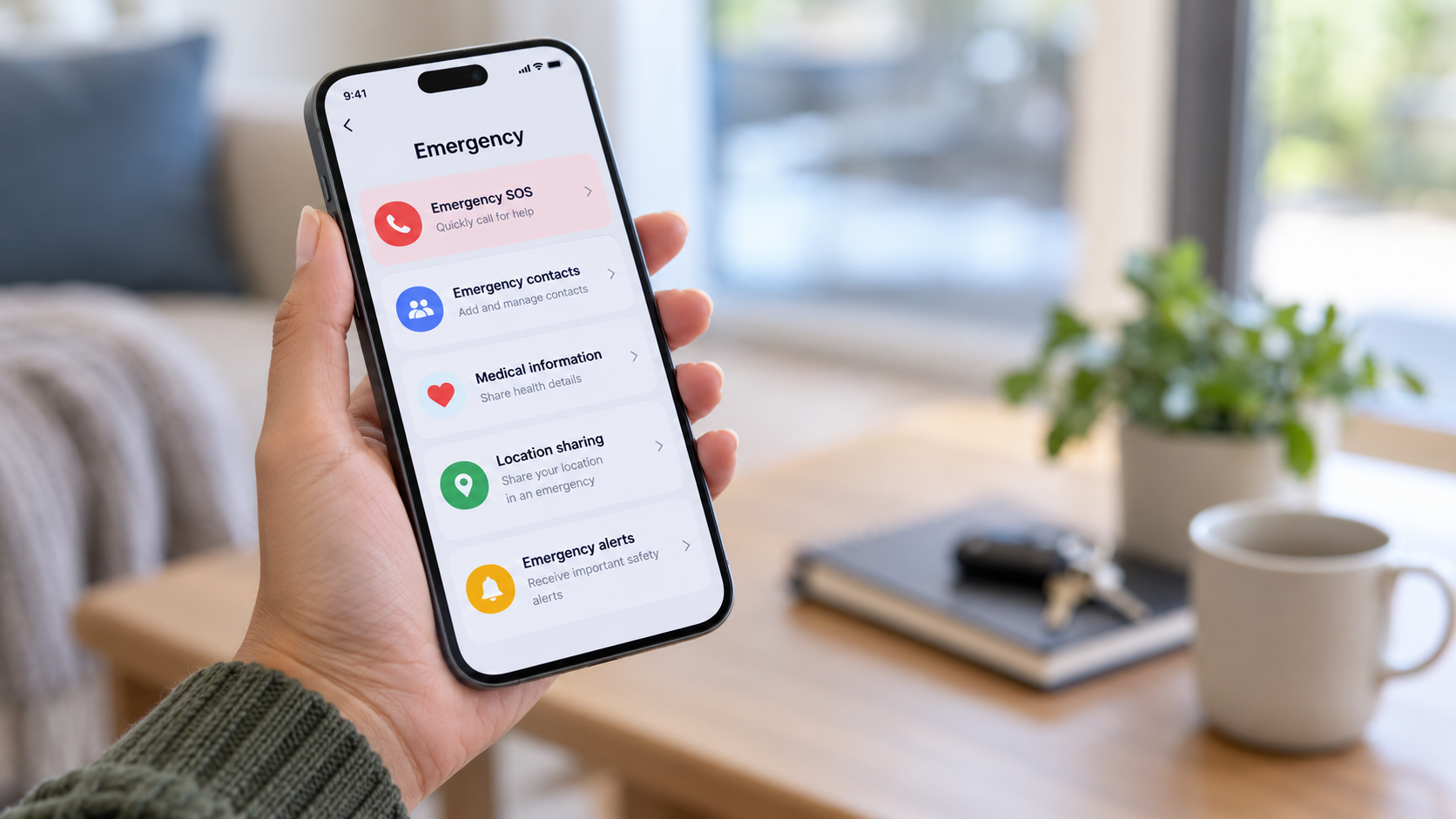
Save the contacts under clear names on your phone. Place a printed copy somewhere accessible at home and give the list to the people in your household.
Review it every few months. Community contacts, service providers and control-room numbers can change.
An emergency plan should not depend on one number, one app or one person answering.