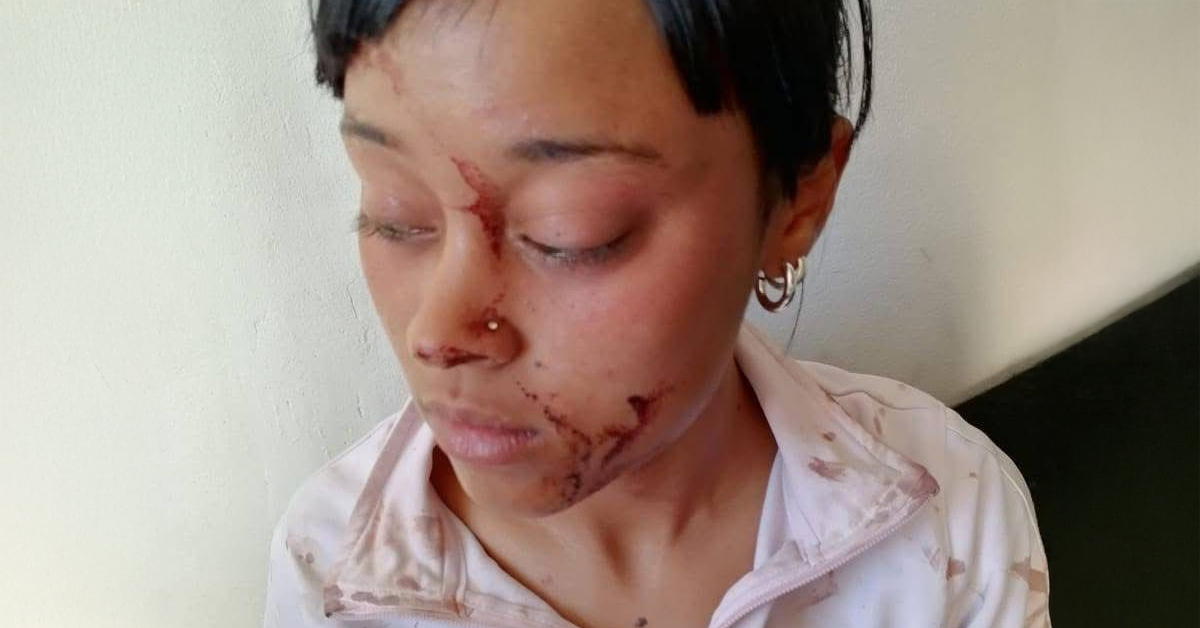
Action Society has renewed its call for urgent accountability and reform within the South African Police Service (SAPS) following yet another case paralysed by the national DNA backlog. More than a year and a half after the brutal murder of 18-year-old Zanele (Zaza) Faith Mokoena in Thokoza, Ekurhuleni, her family is still waiting for justice.
Zanele’s burnt body was discovered on 8 May 2024 in an open veld near RP Maphanzela School, a day after she was allegedly kidnapped. The family received chilling WhatsApp messages from a man claiming to have abducted her and demanding a ransom, threatening to kill her if they did not pay by the next morning. Despite reporting this to the police immediately, Zanele was found murdered hours later.
A suspect known to Zanele was arrested shortly after her death, and the available evidence strongly supports the case against him. However, progress has been halted because the DNA analysis has still not been finalised. The family also raised concerns that crucial evidence was left behind at the crime scene, material they themselves later collected.
Action Society described this as a shocking reflection of the SAPS’s declining investigative standards and repeated failures to protect victims.
“The rise in kidnapping cases, the police’s investigative incapacity and the collapse of forensic services are not isolated problems,” said Juanita du Preez, Action Society Spokesperson. “They are deeply interconnected symptoms of a justice system in decline. Criminals operate with growing confidence because evidence is mishandled, laboratories are failing, and detectives are overwhelmed. The result is that victims’ families are left in limbo while perpetrators walk free.”
According to the Institute for Security Studies (ISS), South Africa has seen a 264 percent increase in reported kidnappings over the past decade, rising from about 4 692 cases in 2014/15 to more than 17 000 in 2023/24. The ISS notes that many kidnapping victims are women and children, and that most incidents are connected to robberies, extortion or interpersonal disputes rather than organised ransom groups.
Action Society says Zanele’s case mirrors that of Gaby Ndaba, another young woman who went missing and was later found murdered. Her case, too, remains stalled because of poor investigation and outstanding forensic evidence. These cases highlight the ongoing failure of the criminal justice system to protect women and ensure swift accountability for violent crimes.
According to a media statement issued on behalf of the Portfolio Committee on Police on 11 March 2025, the SAPS Forensic Science Laboratory division’s DNA backlog was reported to exceed 140 000 cases. Each untested sample represents a family waiting for justice that should already have been served.
“It is unacceptable that evidence in clear and solvable cases like Zanele’s and Gaby’s is still waiting to be tested,” Du Preez added. “Action Society has repeatedly called for public–private partnerships to help clear the forensic backlog and for decentralised forensic capacity that will allow provinces to process evidence more efficiently. Justice delayed is justice denied.”
Action Society continues to support the families of Zanele Mokoena and Gaby Ndaba and will persist in its national campaign for accountability in the SAPS and the restoration of forensic capacity within South Africa’s criminal justice system.
Soundbite: