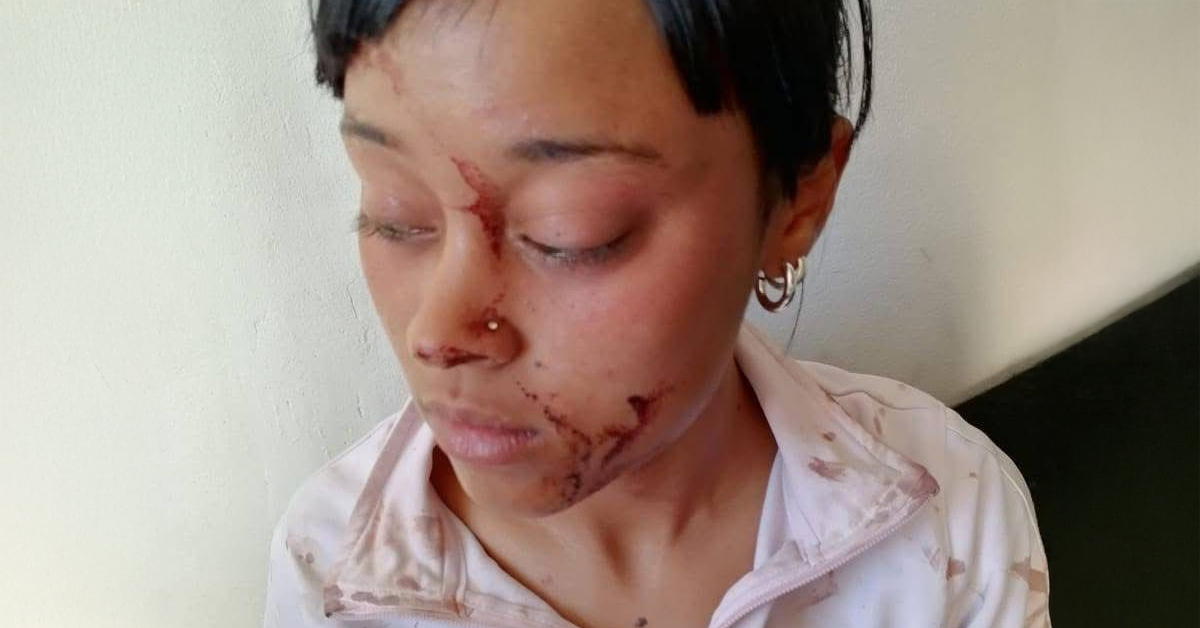
Action Society has formally escalated its concerns to the Western Cape Division of the High Court after sentencing in the brutal rape and murder of Cytheria Rex was postponed on 19 January 2026, 415 days after her killers were convicted. Cytheria was raped and stabbed 30 times. Almost seventeen years later, her family remains trapped in a cycle of delay and uncertainty, forced to endure repeated postponements while the men responsible for this extreme violence continue to avoid final sentencing.
Cytheria Rex was murdered in Kraaifontein in 2009 after being raped and subjected to a sustained and frenzied knife attack. The severity of her injuries reflected a level of violence that shocked the community and should have placed the case among the highest priorities of the criminal justice system.
Instead, the matter became one of the longest-running murder trials in South African history, plagued by almost seventeen years of systemic dysfunction. According to official information referenced by Action Society, the case has been postponed at least 128 times since being placed on the trial roll in 2009. These delays stemmed from a combination of accused-related conduct and entrenched systemic failures, including breakdowns in legal representation, judicial availability constraints, administrative failures, and prosecutorial capacity challenges.
On 30 November 2024, five men, Virgil Sass, Oswill Grootboom, Imeraan Hendricks, Lee Cloete and Rhonwen Rhode, were found guilty of Cytheria Rex’s rape and murder. Two other accused died during the prolonged proceedings. Despite the severity of the crime and the successful convictions, sentencing had still not taken place 415 days later. On 19 January 2026, the matter was postponed to 26 August 2026 to allow for the appointment of a magistrate in terms of Section 275 to preside over sentencing.
In a formal letter dated 30 January 2026, Action Society wrote to the Honourable Judge President of the Western Cape Division of the High Court, raising serious concerns about case flow management and systemic delays in exceptionally long-running criminal matters. The organisation emphasised that while many postponements may arise from factors beyond judicial control, delays of this magnitude undermine constitutional imperatives, erode public confidence in the administration of justice, and create the perception that accountability can be avoided through procedural attrition.
“This was not a minor offence or a technical matter. This was a rape followed by a savage killing,” said Juanita du Preez, national spokesperson for Action Society. “When a case involving this level of brutality is postponed more than a hundred times and still cannot reach finality almost seventeen years later, the harm extends far beyond one family. It signals a systemic failure that demands judicial leadership and institutional intervention.”
Action Society stressed that its correspondence does not seek to interfere with judicial independence, but rather to call for stronger oversight mechanisms, improved monitoring of aged matters, and stricter controls on serial postponements in cases where delays become extraordinary.
The continued failure to conclude sentencing denies Cytheria Rex’s family any sense of closure and compounds the trauma inflicted by the original crime. It also sends a chilling message to survivors of violence against women that even when convictions are secured, justice can still collapse at the final step.
Action Society warns that justice delayed on this scale becomes justice denied. The organisation calls for decisive judicial leadership and structural safeguards to ensure that no family is left waiting decades for the criminal justice system to finish its work.
“Cytheria Rex was raped and stabbed 30 times. The law recognised that crime and secured convictions,” Du Preez said. “What has failed is the system’s ability to bring the matter to a close. Her family has waited almost seventeen years. That wait has already gone on far too long.”
Soundbite: