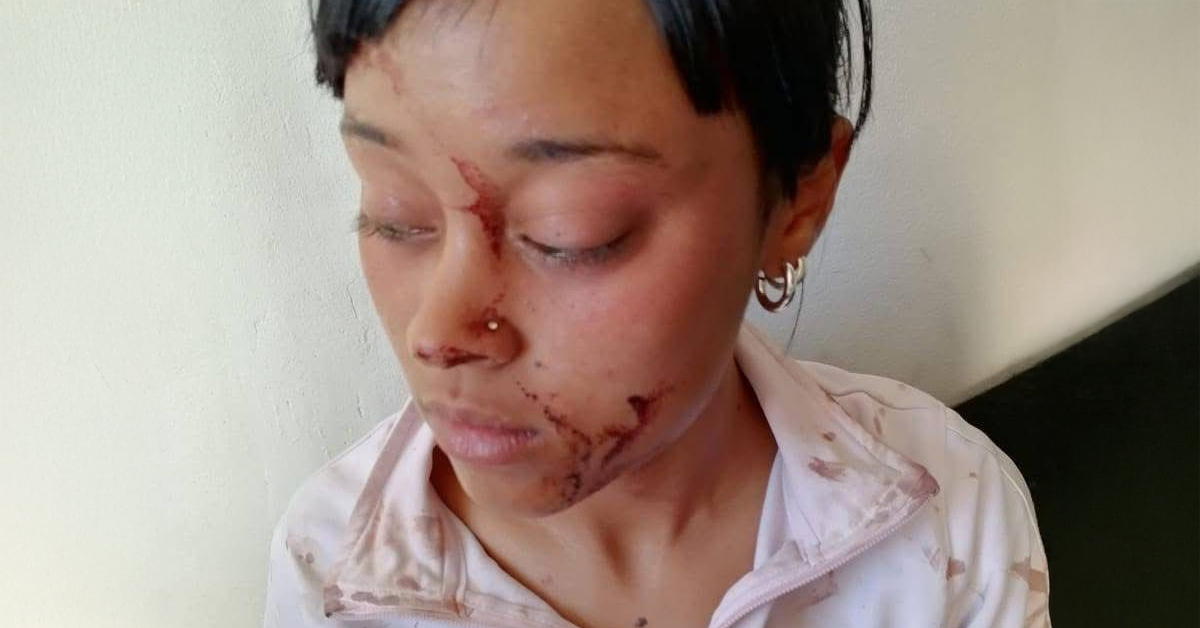
Action Society is supporting the family of Nonkululeko Gabriella “Gaby” Ndaba and has raised serious concerns about the handling of the investigation nearly three years after her death. The organisation says the latest developments reveal not only investigative failures but also a troubling lack of coordination between different structures within the South African Police Service (SAPS).
Gaby Ndaba went missing on 26 May 2023 in Boksburg. Six days later, on 1 June 2023, her body was discovered under a bridge, just days before her 32nd birthday. From the moment she was reported missing, the investigation was plagued by delays and investigative failures.
According to the Ndaba family, police showed little urgency when the missing persons report was filed, failed to trace Gaby’s cellphone even though it continued ringing until approximately 08:00 the following morning, and did not properly secure the scene where her body was discovered. Several items of potential evidence were later recovered by the family themselves.
Further concerns were raised when Gaby’s cellphone was returned to the family before proper forensic analysis had been completed, while key witnesses were not properly followed up.
Action Society says these failures form part of a broader pattern of investigative breakdowns that have left the case without answers nearly three years later.
“Our souls are kept hostage by the justice system,” says Gaby’s mother, Ntombifuthi Stander. “Instead of leading the investigation, the police only move when our family pushes for answers.”
Previously, the Ndaba family met with officials at the provincial police offices in Gauteng and submitted a detailed list of complaints about the handling of the investigation.
Last week, Action Society accompanied the family to the Ekurhuleni district police offices where a meeting had been arranged with the District Commissioner. However, when the family arrived, the office indicated that no such meeting had been scheduled.
The family was then referred to the office of the Detective Commander of the district. There they met with a senior detective who had been delegated by the Detective Commander to listen to the family’s complaints and discuss the way forward in the case.
During that discussion, the family was informed that the purpose of the engagement with the district leadership had been to remove the current investigating officer from the case. The family made it clear that they do not support such a move and fear that replacing the officer at this stage will cause further delays.
The following day, however, the police complaints department contacted the family and informed them that the investigating officer would in fact be removed from the case. This directly contradicts the discussion that had taken place with detectives the day before.
Juanita du Preez, national spokesperson for Action Society, says the situation highlights a serious lack of coordination inside SAPS. “It is clear that different structures within SAPS are not communicating with each other. One department is discussing investigative steps with the family while another department is making decisions that fundamentally change the investigation without consultation,” says du Preez.
During the meeting with detectives, the family was informed that the next investigative step would be to obtain Gaby’s cellphone records through a Section 205 court application. These records must be secured before May 2026, as telecommunications data linked to the critical days surrounding her disappearance on 26 and 27 May 2023 could otherwise be permanently lost.
According to police, the records were not requested earlier because the post-mortem did not establish a conclusive cause of death. An outstanding toxicology report may provide further clarity, but nearly three years later the official cause of death still remains listed as “under investigation”.
Du Preez says the outstanding toxicology report has become a critical bottleneck in the case. “This toxicology report is not a minor administrative step. It is a critical piece of evidence that could determine whether Gaby’s death was the result of a crime. Until it is finalised, the investigation remains stuck in limbo,” says du Preez.
Another serious concern raised by the family is the disappearance of two earlier case dockets linked to the matter. One docket relates to the initial missing persons report and the second to an extortion case opened shortly after Gaby disappeared. Witness statements and other information were reportedly collected in those cases but were never transferred to the main investigation docket. Both dockets have since gone missing.
Du Preez says the loss of these files raises serious concerns about the integrity of the investigation. “When case dockets go missing, it means critical information such as witness statements and early investigative leads may also disappear. That undermines the entire investigation and makes it far more difficult to establish what happened to Gaby,” she says.
The family’s formal submission to SAPS outlines numerous investigative failures, including delays in tracing Gaby’s phone when she was first reported missing, missing case dockets, incomplete witness statements, and ongoing forensic and administrative failures that have materially impacted the investigation.
Du Preez says the Ndaba case highlights how families are often forced to drive investigations themselves when the criminal justice system fails to function effectively. “The family should not be the ones identifying witnesses, pushing forensic processes, and demanding investigative steps. Yet in this case the Standers have repeatedly had to do exactly that,” says du Preez.
Action Society says urgent intervention is now required to prevent further delays in the case. The organisation is calling for the following immediate steps:
- The immediate completion and release of the outstanding toxicology report.
- The urgent execution of a Section 205 application to secure Gaby’s cellphone records before May 2026.
- The clear appointment of a responsible investigating officer and stabilisation of the case so that the investigation can proceed without further disruption.
- A full investigation into the disappearance of the missing person and extortion case dockets, and the recovery or reconstruction of all statements and evidence contained in those files.
Soundbite: